
This is general home coffee and tea information, not medical, electrical, plumbing, food-safety, or professional barista advice. Confirm appliance instructions, caffeine needs, ingredients, allergens, and product details before changing your routine or buying gear.
An Under-Cabinet Coffee Shelf That Keeps the Counter Clear is written for ordinary kitchens, ordinary mornings, and drink routines that need to work even when the counter is busy. The goal is not a perfect cafe setup; it is a smaller path that makes the next cup easier to start and easier to reset.
Use this note to look at where beans, filters, mugs, backup supplies, and daily tools should live before buying another container, tool, syrup, mug, or appliance. Keep what fits your home, skip what does not, and use the related notes when the next small friction appears.
Name the small problem first
Most drink corners become frustrating because several tiny decisions are stacked together. A missing spoon, a wet counter, a stale jar, a cord in the wrong place, or a bottle without a date can make the whole routine feel larger than it is.
Before changing the shelf, name the exact moment you want to improve. That sentence keeps the fix practical and prevents the space from turning into a display for things you rarely use.
- Use the shelf for backups instead of crowding the active counter.
- Keep the daily cup and tool path lower and easier to reach.
- Label backup packs so they do not disappear behind prettier jars.
Build the route around the way you actually move
Walk through the drink at the time you normally make it. Notice where you reach twice, where your hand pauses, which cabinet opens too often, and what lands on the counter after the drink leaves the kitchen.
The better layout is usually not the prettiest one. It is the one that keeps water, cup, ingredient, tool, and cleanup close enough that the routine can survive a tired morning or a crowded evening.
- Measure cabinet depth before adding bins or shelves.
- Move duplicate mugs out of the daily path.
- Keep filters dry and flat.
- Reserve one visible spot for the supply that runs out fastest.
Keep daily supplies separate from backup supplies
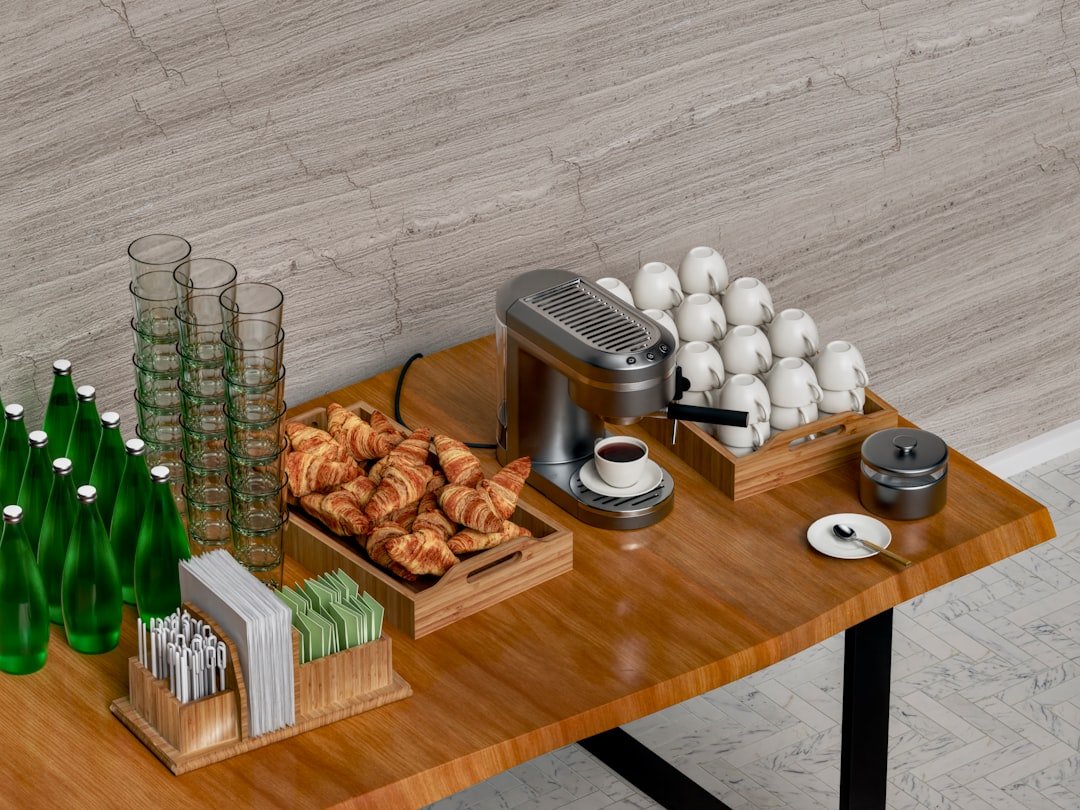
A drink station often looks full because daily items and backup items are mixed together. The active shelf only needs the pieces used this week. Extra filters, backup beans, spare tea, seasonal syrups, and guest cups can live nearby but not in the main path.
This split makes refills easier to see. It also helps you avoid buying duplicates because you can tell the difference between the one jar you are using and the extra pack waiting behind it.
- Use the shelf for backups instead of crowding the active counter.
- Keep the daily cup and tool path lower and easier to reach.
- Label backup packs so they do not disappear behind prettier jars.
- Leave open counter space for water, brewing, and wiping.
Make the reset visible enough to repeat
The reset should be obvious even when you are done thinking about the drink. A towel, a small bin, a date label, a refill mark, or a landing spot can do more than another decorative tray.
If the routine still feels too heavy after a week, reduce it again. One cup, one tool, one shelf, one refill cue, and one cleanup action are enough for a useful daily station.
- Remove one item that is not used weekly.
- Choose one visible cue for refill or cleanup.
- Put the most-used item closest to the first step.
- Review the setup after one normal week, not after a perfect reset.