This is general home coffee and tea information, not medical, electrical, plumbing, food-safety, or professional barista advice. Check appliance instructions, ingredients, caffeine needs, and current product details.
Shared-Kitchen Brew Boundaries for Roommates and Families is a practical guide for the home drink routine. Use it when the problem is real enough to notice but still small enough to improve with a clearer routine, better setup, or more careful buying decision.
Shared-Kitchen Brew Boundaries for Roommates and Families is written for ordinary kitchens, ordinary mornings, and drink routines that need to work even when the counter is busy. The goal is not a perfect cafe setup; it is a smaller path that makes the next cup easier to start and easier to reset.
Use this note to look at shared supplies, personal favorites, noise, cleanup, and refill expectations before buying another container, tool, syrup, mug, or appliance. Keep what fits your home, skip what does not, and use the related notes when the next small friction appears.
The useful starting point is the coffee corner, kettle area, mug shelf, pantry, fridge door, sink, counter, or shared kitchen. A calm way to separate personal beans, shared mugs, refills, cleanup, and noise expectations when more than one person uses the same drink corner. The goal is to name the friction before choosing another coffee maker, kettle, grinder, tea, matcha, bottle, frother, filter, or storage item.
Quick answer
The quick answer: treat shared-kitchen brew boundaries for roommates and families as a problem-first note. Name what is happening, where it happens, and what would make it easier before changing the whole routine or buying another coffee maker, kettle, grinder, tea, matcha, bottle, frother, filter, or storage item.
For Coffee Corner Setup, the best answer is usually a small sequence: observe the current setup, remove one source of friction, test the smallest repeatable change, then decide whether a purchase or outside help is still needed.
- Label shared and personal supplies before they become arguments.
- Agree on noise, grinder timing, and cleanup expectations.
- Create one refill cue everyone can understand.
Step 1: Name the friction before changing anything
Write the friction in one sentence. Avoid broad labels like 'the room is bad', 'the routine is broken', or 'I need better gear'. A useful sentence names the place, the moment, and the repeated problem.
This step matters because buying drink gear before checking space, cleanup, water path, caffeine needs, shared use, and the drink you actually repeat. Once the friction is named, the next change can stay small enough to test instead of becoming a full redesign.
- Where does this happen: coffee corner, kettle area, mug shelf, pantry, fridge door, sink, counter, or shared kitchen?
- When does it show up: daily, weekly, before use, after use, or only under pressure?
- Who else uses or depends on this setup?
- What would count as a better version tomorrow, not someday?
Step 2: Try the smallest useful reset
The smallest useful reset is the one that makes the problem easier to see. It may be moving one item, measuring one space, writing one note, cleaning one surface, testing one schedule, or removing one product from the active area.
Keep the reset narrow. If it needs a perfect weekend, a new system, or a big shopping list, it is probably too large for the first pass. The first pass should teach you what the home drink routine actually needs.
- Change one visible cue or one decision point.
- Leave the rest of the setup mostly unchanged for the first test.
- Notice whether the problem gets smaller, clearer, or simply moves elsewhere.
- Repeat only the parts that still make sense after a normal day.
Step 3: Decide whether buying belongs here
A coffee maker, kettle, grinder, tea, matcha, bottle, frother, filter, or storage item earns attention only when it answers the named problem. It should fit the space, timing, budget, maintenance, storage, cleaning, safety, and return path that the real situation requires.
If the small reset already made the situation easier, buying may become smaller or unnecessary. If the reset exposed a specific gap, the product decision becomes clearer because it has a job to do.
- The product or service solves the named friction, not a vague wish.
- Size, fit, setup, cleaning, storage, and maintenance are realistic.
- Return terms, warranties, instructions, policies, or care labels are clear.
- The purchase will still make sense after the initial excitement fades.
Name the small problem first
Most drink corners become frustrating because several tiny decisions are stacked together. A missing spoon, a wet counter, a stale jar, a cord in the wrong place, or a bottle without a date can make the whole routine feel larger than it is.
Before changing the shelf, name the exact moment you want to improve. That sentence keeps the fix practical and prevents the space from turning into a display for things you rarely use.
- Separate shared supplies from personal beans or tea.
- Agree on grinder noise and early-morning timing.
- Use one refill note everyone can understand.
Build the route around the way you actually move
Walk through the drink at the time you normally make it. Notice where you reach twice, where your hand pauses, which cabinet opens too often, and what lands on the counter after the drink leaves the kitchen.
The better layout is usually not the prettiest one. It is the one that keeps water, cup, ingredient, tool, and cleanup close enough that the routine can survive a tired morning or a crowded evening.
- Name what is shared and what is personal.
- Set a quiet-hours rule for loud tools.
- Decide who refills filters, milk, or beans.
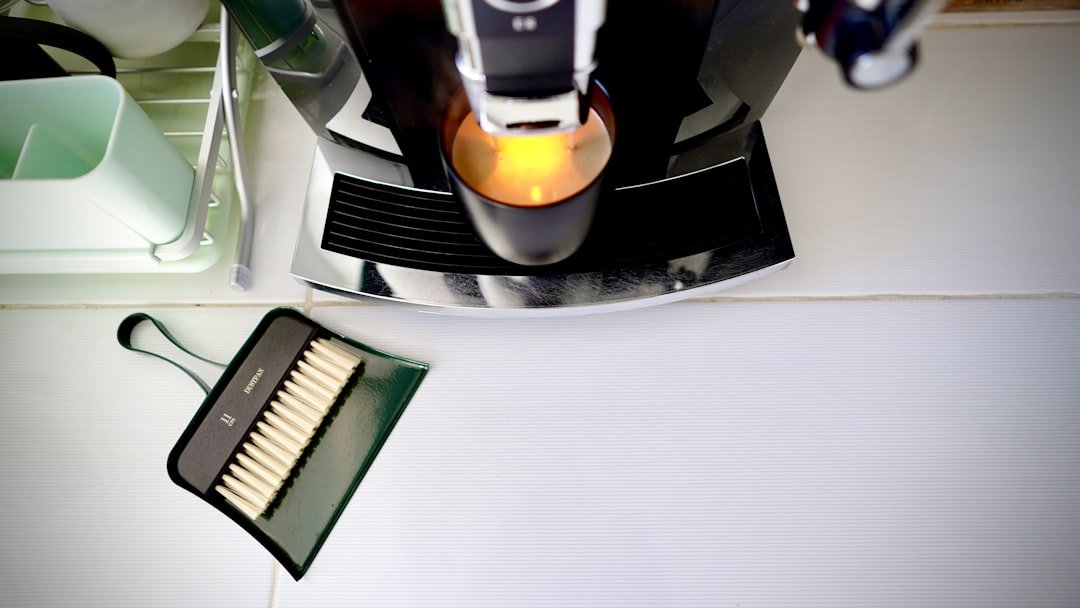
- Keep a small towel and brush where mess begins.
Keep daily supplies separate from backup supplies
A drink station often looks full because daily items and backup items are mixed together. The active shelf only needs the pieces used this week. Extra filters, backup beans, spare tea, seasonal syrups, and guest cups can live nearby but not in the main path.
This split makes refills easier to see. It also helps you avoid buying duplicates because you can tell the difference between the one jar you are using and the extra pack waiting behind it.
- Separate shared supplies from personal beans or tea.
- Agree on grinder noise and early-morning timing.
- Use one refill note everyone can understand.
- Make cleanup a visible habit, not a private complaint.
Make the reset visible enough to repeat
The reset should be obvious even when you are done thinking about the drink. A towel, a small bin, a date label, a refill mark, or a landing spot can do more than another decorative tray.
If the routine still feels too heavy after a week, reduce it again. One cup, one tool, one shelf, one refill cue, and one cleanup action are enough for a useful daily station.
- Remove one item that is not used weekly.
- Choose one visible cue for refill or cleanup.
- Put the most-used item closest to the first step.
- Review the setup after one normal week, not after a perfect reset.
Three practical scenarios
Use these scenarios to decide whether shared-kitchen brew boundaries for roommates and families is a small reset, a buying decision, or a sign that a different guide should come first.
Use it now
The friction is clear, the change is small, and the current setup can be improved without a major purchase.
- The need is visible.
- The first reset is easy.
- The risk is low.
Check before buying
The problem is real, but the product or service has not earned the space yet. Compare fit, care, use frequency, policies, and cleanup first.
- Measure or test first.
- Check return terms.
- Avoid buying around uncertainty.
Read sideways
The first problem may actually point to A Guest Coffee Tray for Easy Weekend Hosting and A Morning Brew Routine for Real Weekdays. Follow that route if it better matches the repeated friction.
- The problem moved.
- Another category fits better.
- The current fix feels forced.
Buying check before you commit
Before buying, remove the sales language from the decision. Would this still be the right coffee maker, kettle, grinder, tea, matcha, bottle, frother, filter, or storage item if there were no sale badge, social proof, or urgency around it? If not, keep working the setup first.
The best purchase should make it easier to make the drink routine easier to repeat. It should reduce friction in daily use, not add a second routine that is harder to maintain than the original problem.
- The problem is named in one sentence.
- The item or service has a clear job.
- The setup, cleaning, storage, and maintenance are realistic.
- The cost still makes sense after accessories, refills, shipping, or return limits.
- There is a clear reason this option beats waiting, borrowing, testing, or simplifying.
Common mistakes
The most common mistake is skipping the room, routine, or workflow and jumping straight to the product. That makes every option look like progress even when the actual friction is still unnamed.
Another mistake is changing too many pieces at once. If the result improves, you will not know what helped. If it fails, you may throw away a useful idea because it was bundled with three unnecessary changes.
- Buying before measuring the real use case.
- Treating a one-time frustration as proof that the whole setup is wrong.
- Ignoring cleaning, storage, refill, return, safety, or policy details.
- Copying a routine that does not match the household, budget, space, or schedule.
- Letting a sale, trend, or review replace the practical checklist.
FAQ
Q: What should I do first? A: Name the exact friction, then test one small change. For this topic, start with the coffee corner, kettle area, mug shelf, pantry, fridge door, sink, counter, or shared kitchen instead of a product page.
Q: When should I buy something? A: Buy only when the item or service has a specific job, fits the real setup, and still makes sense after maintenance, return terms, and everyday use are considered.
Q: What if the first reset does not work? A: That still teaches you something. Check whether the problem belongs to another part of the routine, then use a related guide such as A Guest Coffee Tray for Easy Weekend Hosting and A Morning Brew Routine for Real Weekdays if it fits better.
Q: Is this professional advice? A: No. This is general home coffee and tea information, not medical, nutrition, electrical, plumbing, or professional barista advice. Follow appliance manuals, food labels, caffeine needs, allergens, and safety instructions.